Guide
How to Buy a Hybrid Car in 2026: When Hybrid Beats EV and Gas
A practical guide to choosing regular hybrids, plug-in hybrids, and efficient gas cars in 2026 - with battery checks, incentive traps, commute math, and negotiation tactics.
By Motorscrape Team
Hybrids are having a practical moment. EVs still make sense for many drivers, and efficient gas cars are not obsolete, but a well-chosen hybrid can be the lowest-friction answer for buyers who want lower fuel use without rebuilding their routine around charging. The trick is knowing which kind of hybrid fits your driving, how to inspect the battery side of the car, and when a dealer is pricing "hybrid demand" into the sticker.
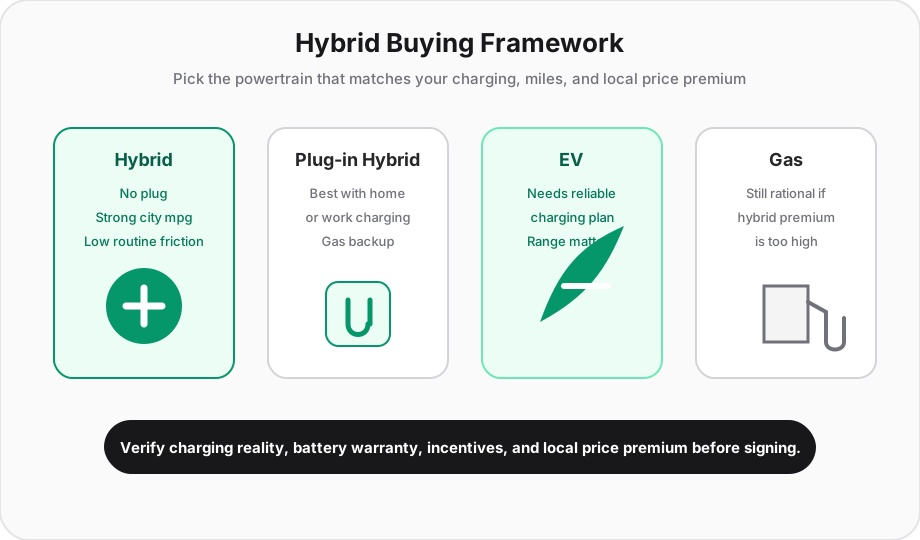
1. Know the three electrified choices
The word "hybrid" covers different ownership experiences:
- Regular hybrid (HEV): You fuel it like a normal gas car. The battery helps at low speed, stop-and-go driving, and acceleration. This is the easiest ownership path for apartment dwellers, high-mileage commuters, and buyers who do not want charging homework.
- Plug-in hybrid (PHEV): You can drive some local miles on electricity, then fall back to gas when the battery is depleted. PHEVs are strongest when you can charge at home or work most days.
- Full EV: No gas engine, lower routine maintenance, and the biggest charging dependency. EVs deserve their own range, charger, and battery-health analysis.
If you cannot charge reliably, do not buy a PHEV because the badge sounds advanced. A PHEV used like a regular gas car carries extra weight and complexity without delivering its best benefit.
2. Match the car to your weekly miles
Start with a normal week, not a fantasy road trip.
- Mostly city driving: Regular hybrids shine because regenerative braking and engine-off creeping reduce fuel use where gas cars are least efficient.
- Short daily commute plus home charging: A PHEV can cover many routine trips electrically while keeping gas range for weekends.
- Long highway commute: Compare actual highway mpg and seat comfort. Some hybrids lose part of their advantage at steady interstate speeds.
- Frequent towing, mountains, or extreme cold: Verify payload, cooling, and real-world owner reports for the exact trim. Electrified powertrains differ widely under load.
Write down your weekly mileage, parking situation, and longest monthly drive before shopping. That turns the choice from a trend decision into a fit decision.
3. Used hybrid battery checks
Hybrid batteries are not automatic deal-breakers, but they are not invisible either. On a used hybrid:
- Ask whether the hybrid battery warranty is still active and transferable.
- Review service records for cooling-system maintenance, inverter-related work, and recall completion.
- Test drive long enough to watch smooth transitions between engine and electric assist.
- Have a qualified shop scan hybrid-system codes before you buy an out-of-warranty example.
Be especially careful with vehicles that sat unused for long periods. Low mileage can be good, but batteries and cooling systems still prefer regular exercise.
4. Incentives and PHEV rules change
Do not build your budget around an incentive until the dealer confirms eligibility for the specific VIN and your tax situation. PHEV and EV credits can depend on vehicle sourcing, battery rules, price caps, income limits, state programs, lease structure, and point-of-sale handling.
The practical rule: negotiate the vehicle price first, then treat incentives as a documented line item. A vague "you should qualify" is not a buying plan.
5. Watch the hybrid premium
High-demand hybrids can carry markups or thin discounts, especially when gas prices are volatile or supply is tight. That does not mean you should overpay.
Use Motorscrape's live search to compare the same model across nearby dealers. Look for:
- Identical trims with different asking prices.
- Days on lot that suggest the store may be more flexible.
- Gas-only, hybrid, and PHEV versions of the same model so you can see the real local premium.
- Competing inventory a short drive away, which gives you leverage without arguing.
If the hybrid premium takes years to recover in fuel savings, the smarter buy may be a lightly used hybrid, a different trim, or an efficient gas model at a much better price.
6. PHEV ownership traps
PHEVs are excellent when used correctly and disappointing when misunderstood.
- Charging from a normal household outlet may be fine for short electric range, but confirm charge time before assuming.
- Some PHEVs have smaller cargo areas because the battery occupies space.
- Gas engines in PHEVs still need maintenance even if you drive mostly electric.
- Old fuel can matter if the gas engine rarely runs; follow the owner's manual.
Ask the dealer to show charging equipment, cable condition, and charge-port operation during delivery. Small missing pieces become annoying fast.
7. When each choice wins
Choose a regular hybrid if you want low drama, strong city efficiency, and no charging dependency.
Choose a plug-in hybrid if you can charge consistently and your daily driving fits inside the electric range often enough to matter.
Choose an EV if you have reliable charging, predictable range needs, and want to eliminate gas maintenance entirely. Our EV buying guide covers that path in more detail.
Choose an efficient gas car if the hybrid premium is too high, you drive mostly highway miles, or you are shopping older used inventory where battery diagnostics are unclear.
8. Bottom line
The best 2026 hybrid buy is not the most electrified car on the lot. It is the car whose fuel savings, battery risk, warranty coverage, charging reality, and local price premium all make sense together. Shop the powertrain like any other major option: verify it, price it against local alternatives, and walk away when the math depends on optimism.