Guide
The True Cost of Car Ownership: A 10-Year Breakdown (2026 Edition)
The sticker price is just the beginning. Over a decade, depreciation, fuel, insurance, maintenance, and financing can easily add $40,000–$70,000+ to your total outlay. This deep analysis shows exactly where your money disappears and how smart buyers use real-time inventory data to cut lifetime costs dramatically.
By Motorscrape Team
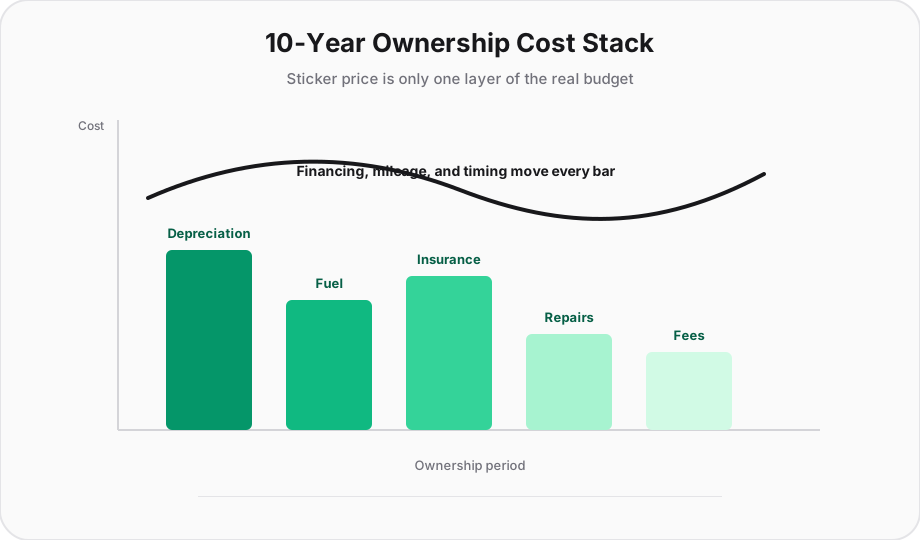
The average American spends more than $10,000 per year on car ownership — yet most buyers only focus on the monthly payment or MSRP. This comprehensive 10-year cost analysis reveals the real economics of owning a vehicle in 2026 and shows you exactly how to reduce your lifetime spend by tens of thousands of dollars using live market intelligence.
The 5 Major Cost Categories (with Real 2026 Numbers)
1. Depreciation — The Silent $25,000–$35,000 Killer (45-60% of total cost)
Depreciation is by far the largest expense. A new $42,000 midsize SUV typically loses value as follows:
- Year 1: 25–30% ($10,500–$12,600)
- Years 2–3: 16–19% per year
- Years 4–6: 11–13% per year
- Years 7–10: 7–9% per year
Illustrative depreciation snapshot (example figures): A $42,000 new SUV might be worth only $12,500 after 10 years and 130,000 miles. $29,500 gone — more than the price of a solid used car.
Motorscrape Strategy: Target 18–36 month old vehicles that have already absorbed the steepest drop. Our inventory filters let you find low-mileage examples still under factory warranty. This single move often saves $15,000–$22,000 in the first five years.
2. Financing Costs — The Compounding Trap ($7,000–$14,000 over 10 years)
Current 2026 average rates are 6.9%–9.1%.
- $38,000 financed for 72 months at 7.8% = $10,800 in interest alone.
- Extending to 84 months adds another $2,900–$4,200 in total interest while keeping you underwater longer.
Advanced Math: Every $5,000 you avoid financing saves roughly $7,200–$9,500 over the loan term. Paying cash or making a 30%+ down payment on a slightly used vehicle is one of the highest-ROI decisions in personal finance.
3. Fuel/Energy + Insurance ($32,000–$52,000 over 10 years)
Energy Costs (13,000 miles/year):
- Traditional gas SUV (21 mpg): $2,650–$2,950/year
- Hybrid: $1,550–$1,850/year
- EV with home Level 2 charging: $780–$1,150/year (varies dramatically by state electricity rates)
Insurance:
- New luxury vehicle: $2,650–$3,100/year
- 3-year-old mainstream model: $1,750–$2,150/year
- 7+ year old paid-off vehicle with $1,000 deductible: $1,350–$1,750/year
Insurance follows a U-shaped curve — highest when new, lowest in years 4–8, then rises again as repair costs increase.
4. Maintenance & Repairs — The Back-Loaded Reality ($9,000–$19,000 over 10 years)
- Warranty years (1–4): $550–$950/year
- Transition years (5–7): $1,400–$2,600/year
- High-mileage years (8–10): $2,400–$5,200/year
2026 Brand TCO Rankings (10-year maintenance):
- Toyota & Honda: $6,200–$8,100 (best in class)
- Mazda & Subaru: $8,400–$10,200
- Ford/GM trucks: $11,500–$14,800
- European premium: $15,000–$22,000 (biggest variance)
5. Taxes, Registration, Tires, Tolls & Parking ($9,500–$16,000 over 10 years)
Varies wildly by state. California owners pay nearly double what Texas or Florida residents do in registration and emissions fees.
EV vs ICE: The 2026 Reality Check
Electric vehicles have lower operating costs but higher insurance and potential battery replacement risk after year 8. In states with high electricity rates or poor home charging access, a hybrid often wins on total cost. Our analysis shows the break-even point is usually year 6–7 for most drivers.
Regional Cost Variations
- Northeast & California: Insurance + registration can add $18,000+ over 10 years.
- Midwest & South: Lower energy and insurance costs make trucks and large SUVs more viable long-term.
- Mountain states: Harsh winters dramatically increase tire and suspension costs.
How Motorscrape Helps You Beat the Numbers
Our platform gives you live visibility into days-on-lot, price trend graphs, and competing local inventory — the exact data needed to buy at the bottom of the depreciation curve and sell before major repair cycles.
Use our search filters to find vehicles with:
- 60+ days on lot (maximum dealer motivation)
- Remaining factory warranty
- Clean Carfax + service records
Actionable Takeaways & 2026 Rules of Thumb
- Never buy new unless you plan to keep the vehicle 10+ years.
- The 18–42 month sweet spot usually offers the best TCO.
- Run a full 10-year projection before signing anything.
- Factor in your actual annual mileage and home charging capability.
The data is unequivocal: informed buyers who use real-time inventory intelligence save $35,000–$55,000 over a decade compared to emotional or convenience buyers.
Start tracking inventory pressure today and transform car ownership from a wealth destroyer into a manageable expense.