Guide
Lease vs. Buy a Car in 2026: Which Actually Costs Less?
Compare leasing and buying with real-world math — cap cost, residuals, mileage limits, and long-term TCO — so you pick the structure that fits your driving pattern.
By Motorscrape Team
"Should I lease or buy?" is really two questions: What can I afford monthly? and What will this cost me over the years I actually drive? Dealerships love leading with the first because lease payments often look lower. Smart shoppers answer the second before they sign.
1. Translate lease jargon into plain English
Leases are structured rentals with a purchase option baked in. Know these terms:
- Capitalized cost (cap cost): The negotiated price of the vehicle for lease purposes — negotiate this like a purchase price.
- Residual value: What the lender predicts the car will be worth at lease end. Higher residual → lower payment, but you pay for depreciation you did not use if you buy out.
- Money factor: The lease interest rate in disguise. Multiply by 2,400 for an approximate APR equivalent.
- Mileage allowance: Typical leases include 10,000–12,000 miles per year. Excess mileage charges often run $0.15–$0.30 per mile — painful if you commute far.
- Disposition fee: A turn-in charge at lease end, sometimes waived if you lease again with the same captive lender.
None of this is inherently bad. It is just a different cost structure than ownership.
2. How a 36-month lease payment is built (conceptually)
Your monthly lease payment roughly equals:
(Cap cost − Residual + Rent charge + Fees) ÷ Term
The rent charge is interest on the average outstanding balance. The depreciation slice is cap cost minus residual, spread over months.
Example pattern (illustrative, not a quote): a $38,000 SUV with a 58% residual after 36 months depreciates about $15,960 over the term — before interest and fees. That depreciation is what you are primarily paying for, not equity.
Always ask for the lease worksheet showing cap cost, residual, money factor, and fees. If they will not provide it, slow down.
3. Three-year snapshot: lease vs. finance vs. cash
Compare total out-of-pocket over a typical 36-month horizon, not monthly payment alone:
| Structure | Typical advantage | Typical risk |
|-----------|--------------------|--------------|
| Lease | Lower payment, newest safety tech, warranty coverage | No equity, mileage caps, wear charges |
| Finance (buy) | Equity after payoff, unlimited miles, customization | Higher payment, depreciation is yours |
| Cash buy | Lowest total interest cost | Large upfront capital, opportunity cost |
After 36 months:
- Lessee returns the car (or buys out at residual) and starts a new payment cycle.
- Buyer may still owe principal but owns an asset — often worth 40–55% of original MSRP on mainstream models, highly variable by brand and condition.
- High-mileage driver often pays more leasing due to mileage penalties than buying would have cost in depreciation.
For a deeper 10-year ownership lens, pair this with our true cost of ownership breakdown.
4. When leasing tends to win
Leasing can be rational if several of these apply:
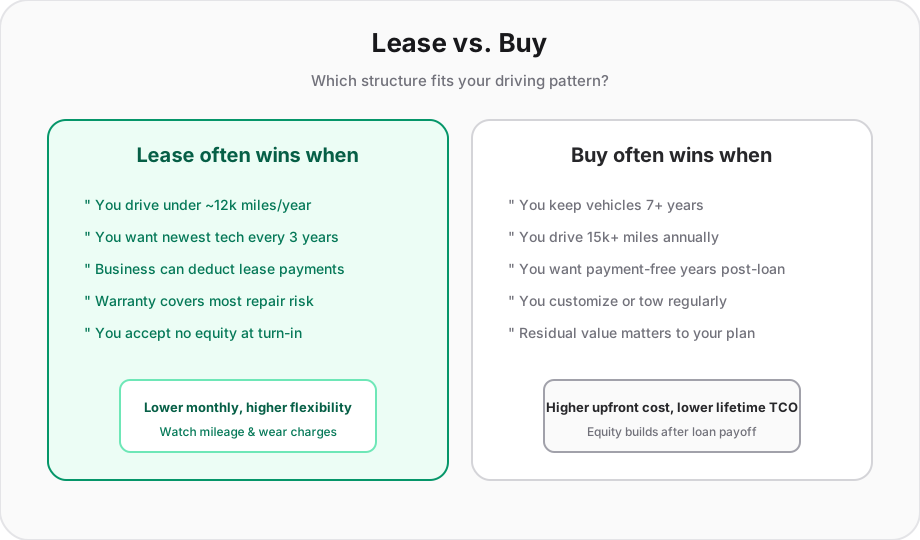
- You drive under ~12,000 miles per year and can forecast that reliably.
- You prefer a new vehicle every 2–3 years and value latest safety and driver-assist tech.
- You want predictable repair exposure — most leases stay under bumper-to-bumper warranty.
- You use the vehicle for business and can deduct lease payments where your tax advisor confirms eligibility.
- The manufacturer is subsidizing the lease with inflated residuals or low money factors — compare effective APR to current finance offers.
Leasing is not "throwing money away" if you would have rotated cars anyway. It is paying for depreciation during the window you use the vehicle, plus rent on the capital tied up in it.
5. When buying tends to win
Buying — especially keeping the car 7–10+ years — usually wins on lifetime cost:
- High annual mileage (15k–20k+) makes lease penalties expensive.
- Post-loan payment-free years are where ownership shines; many buyers run reliable paid-off cars for years.
- Customization, towing, or off-road use may violate lease terms or trigger wear charges.
- Stable, long-term models with strong reliability hold value; you capture that equity instead of the lessor.
If you buy used instead of new, the math often improves further — see our used-car inspection checklist before you commit.
6. Exit traps that inflate lease cost
Read the fine print before you sign:
- Wear and tear: Dents, curb-rashed wheels, and interior damage beyond "normal" generate bills at turn-in. Document condition at delivery with photos.
- Early termination: Breaking a lease early is expensive — you owe remaining payments minus resale value, often a large gap.
- Gap if totaled: If the car is stolen or totaled, insurance pays market value; you may owe more than that. GAP coverage matters — verify whether it is included.
- Trade-in temptation: Dealers may roll prior lease penalties into a new lease, hiding pain in a fresh monthly payment.
7. Negotiation applies to leases too
You can negotiate:
- Selling price / cap cost (most important)
- Documentation and dealer fees (where legal)
- Money factor markup (ask for the buy rate)
- Mileage allowance (sometimes bundled upfront)
You generally cannot negotiate the residual — it is set by the captive finance company. Focus where the dealer has discretion.
Use Motorscrape's live search to compare the same model's availability and pricing across dealers before you walk in — lease or buy, market context anchors your cap-cost negotiation.
8. A simple decision framework
Ask yourself:
1. How many miles will I drive per year for the next 3 years — honestly?
2. Will I want a different vehicle in 36 months regardless of payment status?
3. Can I carry a higher payment to build equity, or do I need lowest monthly outlay?
4. What is my all-in 6-year cost if I lease twice versus buy once and keep?
If you keep cars long, buy (often used). If you rotate frequently and drive modest miles, lease can be fine — as long as you negotiate cap cost like a purchase price and budget for mileage and wear.
Neither choice is morally superior. The expensive mistake is choosing based on monthly payment alone while ignoring exit costs and total miles.